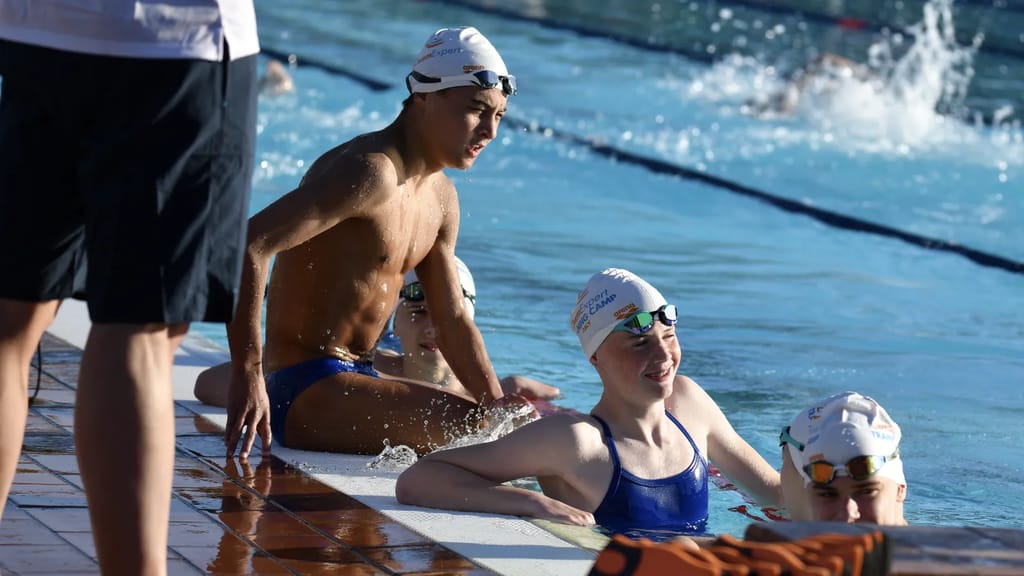
"Will my child keep up?" That is the question I hear most from parents who are thinking about a swim camp. It comes in different forms. One visitor to our site wrote that they weren't sure the camp matched their child's level. Another sent his daughter's 200 breaststroke and 400 IM times straight away and asked if that was enough. And a father whose daughter swims at regional level wanted to know if she would end up among much faster swimmers.
I understand that worry. Nobody wants their child spending a week chasing everyone else down the lane. So here is how we put the groups together, and why the fastest swimmer is not automatically the benchmark.
Why not just put the fastest swimmers together?
At many camps and clubs, speed is the only measure. Fastest swimmers in lane 1, everyone else moves down. It is easy to organise, but it tells you very little about what a swimmer actually needs.
Take two swimmers with the same 100 free time. One is a sprinter who gives away time on every turn. The other prefers distance and loses time underwater after the start. Same speed, completely different needs. Group them on time alone and both end up training for an average.
That is why we group differently.
What we look at
We look at what each swimmer needs most at that moment. Four things go into it:
- Age. Swimmers at the camp are aged 10 to 18. An 11 year old and a 17 year old have different bodies and can handle different loads.
- Stroke preference. A breaststroker has different technique points from someone who mainly swims fly or backstroke.
- Speed. It counts, but it is not the only factor.
- Shared technique goals. Swimmers working on the same thing train together, for example a group focusing on freestyle turns.
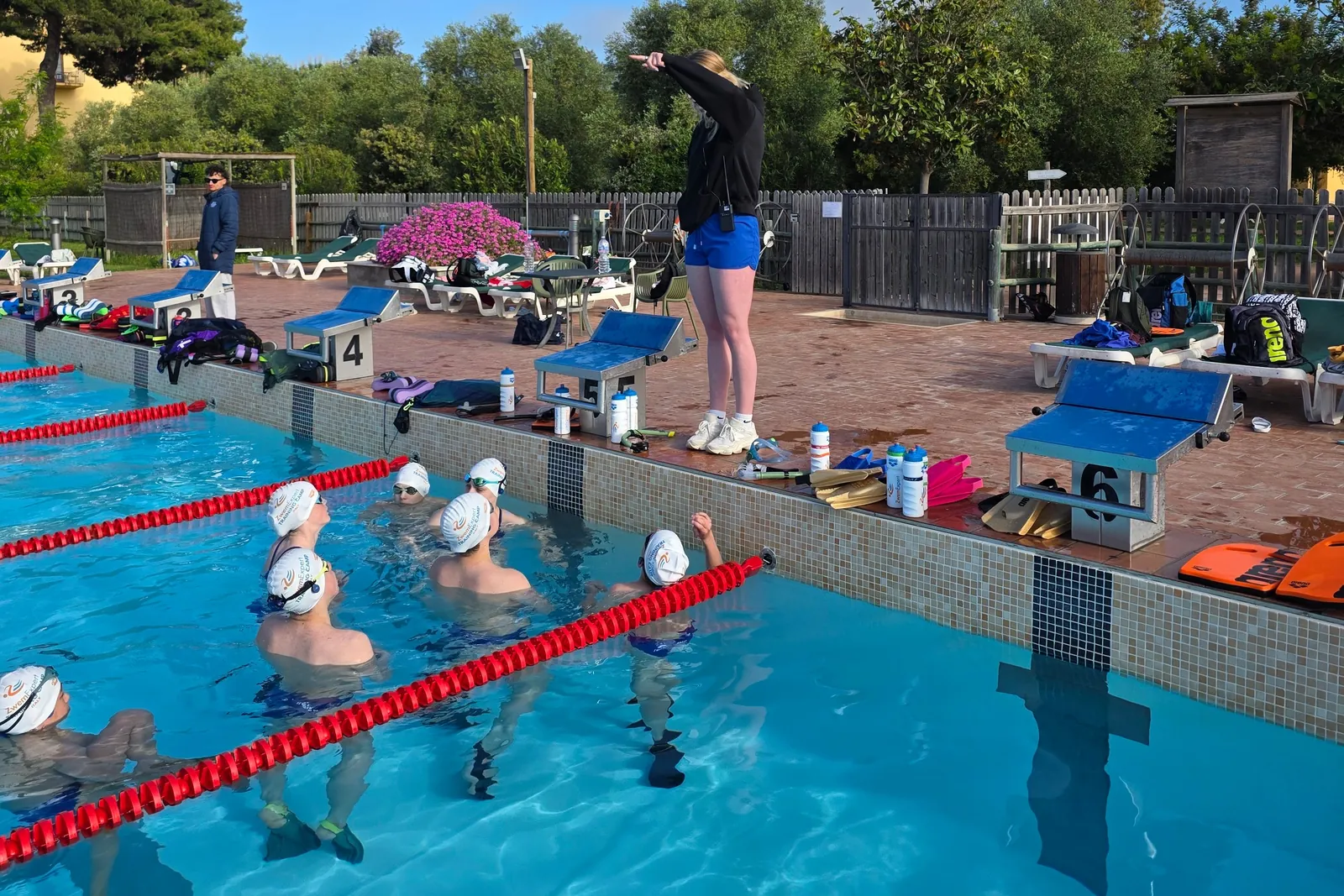
So a fast 13 year old and a slightly slower 15 year old can end up in the same group because both want to sharpen their turns. That is on purpose. They are working on the same thing, and that pushes them both forward.
What if my child isn't one of the fastest?
That is fine. There is also a group for swimmers who are a bit slower. In that group, training is built around their own pace and their own technique points, not around keeping up.
For those swimmers it makes a real difference. They don't spend a week at the back of the lane. They swim with others who are working on the same things, and that brings calm and confidence.
And the fast swimmers? They train with swimmers who challenge them. Everyone gets something out of it.
Individual attention within the group
A group is not a crowd. Within each group, every swimmer gets individual coaching. The coach looks at your child: the hand that enters too early, or the push off the wall that could be stronger.
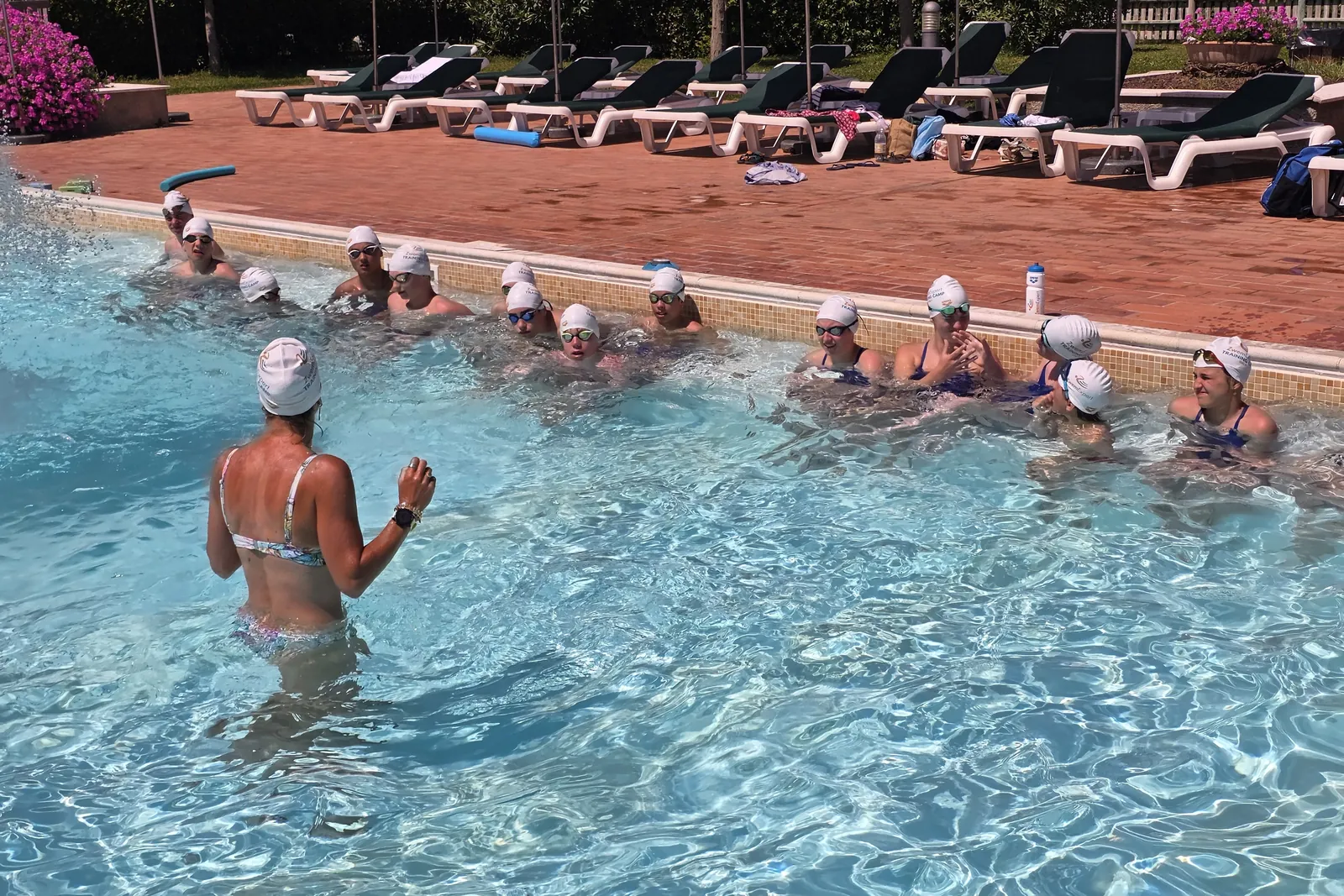
Every camp is led by an Olympic or national champion. A full camp day has two swim sessions of two hours and two dryland sessions. That is enough time to really work on technique, not just swim lengths.
Video analysis: seeing what you can't feel
Many swimmers can't feel what they are doing wrong. That is why we film throughout the camp. Starts are filmed and discussed right away, so your child sees on the pool deck what to change and can try it again on the next start.
Underwater footage is reviewed later, in the group or one to one. In the group we look at what the swimmers have in common. One to one, we focus on the points that apply only to your child.
What your child takes home
Every swimmer takes an analysis home. That way the work from camp doesn't stop after the last session. You can also share the analysis with your child's club coach.
And it works. After the May Camp 2026, our swimmers were on average 1.3 seconds faster on the 100 metres freestyle.
Still comparing camps? My article How to choose a swim camp: 12 questions for every camp organiser lists the questions worth asking every organiser, including how they group swimmers. It comes with a free checklist you can save or print.
Frequently asked questions
Does my child need a certain time to join?
The camp is for competitive swimmers aged 10 to 18. There is also a group for swimmers who are a bit slower, so your child doesn't need to be one of the fastest to take part.
Will my child be in a group with friends or clubmates?
Groups are based on what each swimmer needs: age, stroke preference, speed and technique goals. That means clubmates are not always in the same group.
How big are the groups?
That depends on who comes and what those swimmers need. We group by need, not by a fixed number. Within every group, your child gets individual coaching.
Will I see anything from the video analysis after camp?
Yes. Every swimmer takes an analysis home, and you can share it with the club coach.
May Camp 2027 in Piombino
Our next camp is the May Camp 2027 in Piombino, Italy, from Sunday 25 April to Saturday 1 May 2027. Your child trains in a heated 50 metre pool, in a group that fits what they need right now.
Mike de Bruijn
Organiser, Expert Swimcamp